
BWIA Caribbean guide book
How the island nations once saw themselves.
There was a brief period in the 80s when the Caribbean gloriously devoted itself to articulation in its own vernacular. It was a fragile, exciting time where national TV stations aired original programming made by regional creatives; gwoka and mende rhythms played as frequently as soca or reggae on local radio stations, and then, there were the regional publications...
The British West Indies Airlines or BWIA, more commonly known as Bwee (say bee-wee), would become an unexpected publisher of the most iconic magazines of the era before its rebrand as Caribbean Airlines. Beyond producing their standard in-flight magazine, Bwee would put out these teeny collectible travelogues overflowing with some of the most endearing examples of Caribbean advertising design and typography that exists to this day.
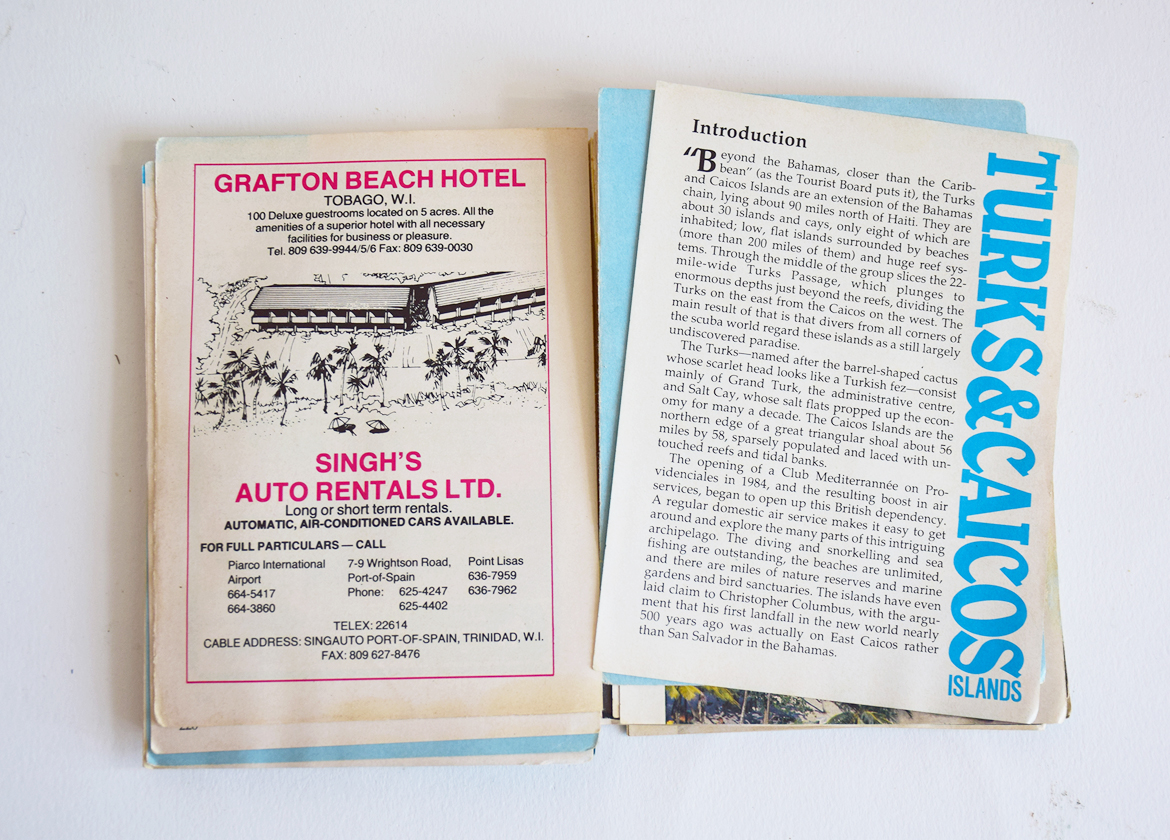
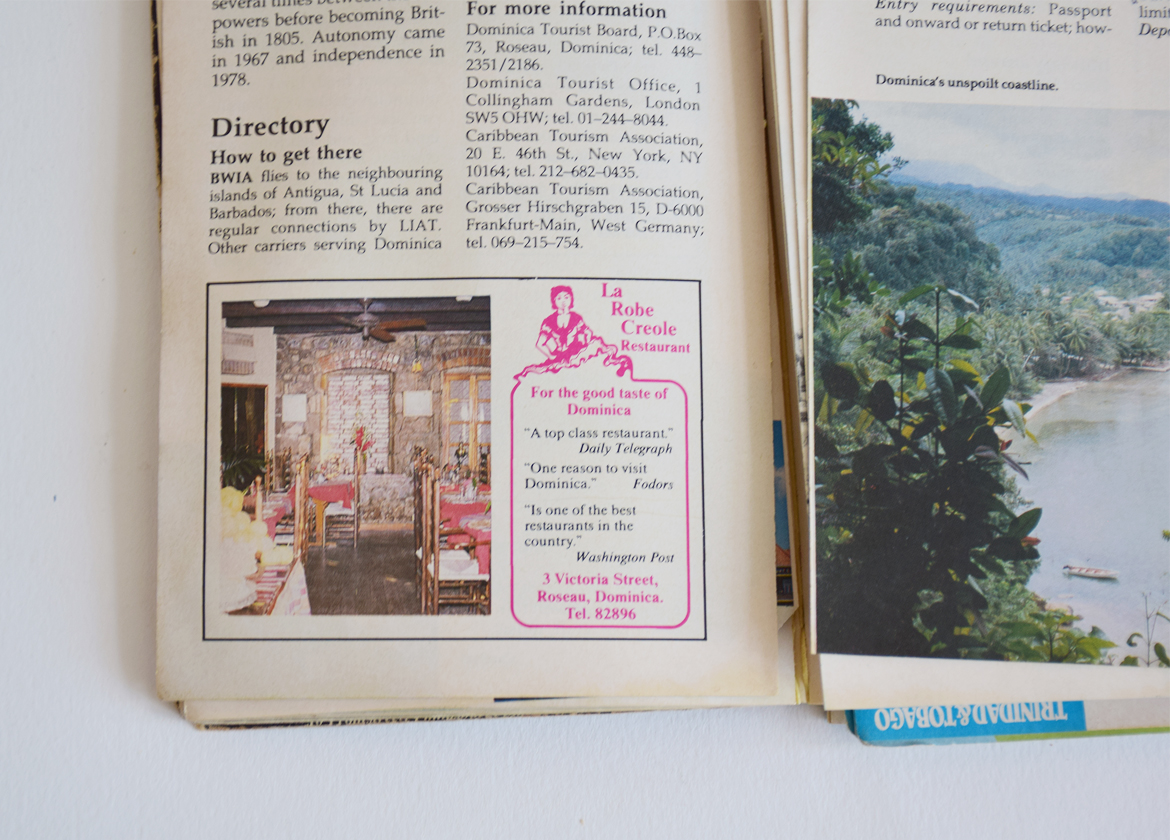
The ads almost always combined illustrations or logos that were hand-drawn and typeset with no devotion to an imposed design lexicon. With barely any kerning between letters and words, line spacing depended more on how much could be crammed into the page instead of optics, and the text included regional-specific jargon as opposed to 'sales copy.'
Occasionally there would be an attempt at maintaining a facade of foreign acceptability through quotes from a lauded, overseas newspaper praising a restaurant or highly rating a car rental service. But even then, it came in a pink, ornate box resembling the latticework of a gingerbread house cornice.
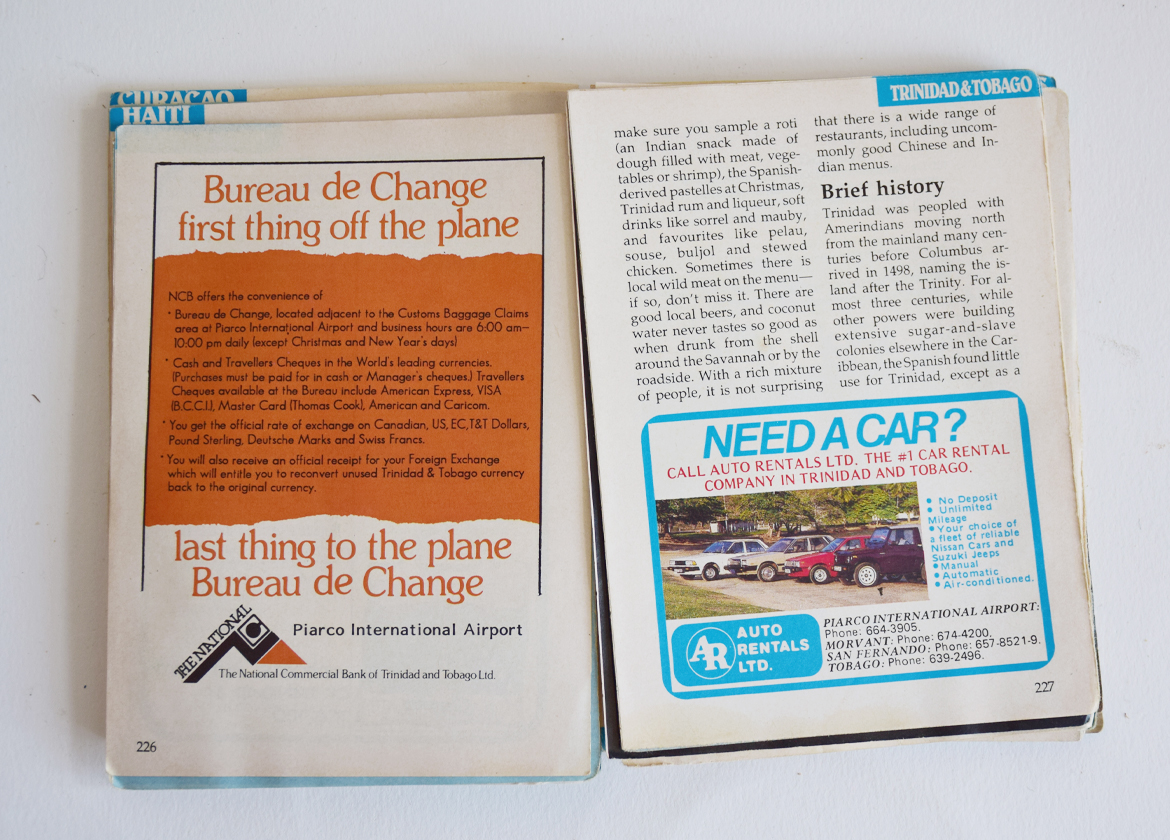
There was an innate understanding that things should first look good to our own tastes, before it was shared with others. And that seemed to come from the question: what was our own taste? The region has largely left that question unanswered in the decades since, and the amortization of individuality via social media has now made us forget that we even asked that question in the first place.
Perhaps, when everything finally looks alike, even on islands that have no business appearing as constructed as an Eastern seaboard cityscape, we might finally resume the search for something different, and of our own making.


